| John Broskie's Guide to Tube Circuit Analysis & Design |
| December 03 2025 | Post Number 629 |
||||
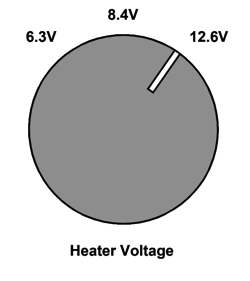
Universal Heater Regulator What if you could get the same great sound that a $150 NOS 6SN7 delivers for about $10? You can. The 6SN7 twin-triode tube was made in three heater voltages: 6.3V, 8.4V, and 12.6V. Since few black-and-white TV sets survive, few want an 8SN7 or 12SN7. These "oddball" tubes languish on dusty shelves. But John, are they really as good as the 6SN7? I mean, really? A $10 tube sounding as good as a $150 tube? Really? Yes, really. They were made at the same factory, at the same time, with the same materials and machines, differing only in the heater element and silkscreened name. Let's take the 6SN7 and 12SN7 as an example.
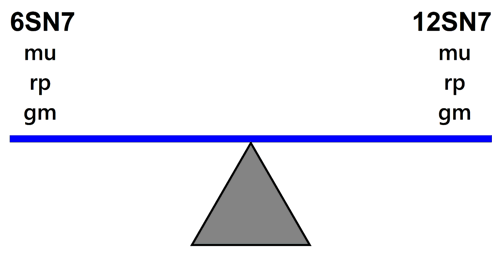
Same amplification factor (mu), plate resistance (rp), and transconductance (gm). Thus, perfectly equal audio performance—just ignore the price-tag difference, which I know is painfully difficult for many audiophiles. (Audio-store owners, in contrast, know that higher $ doesn't always translate into higher performance.)
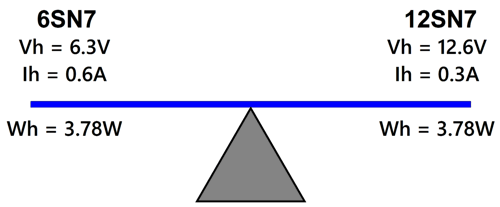
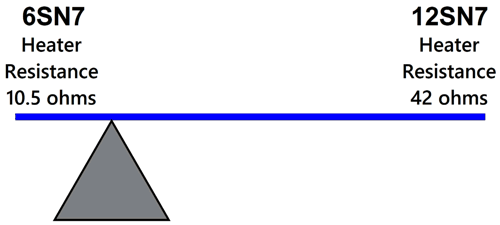
Note that both heaters dissipate the same wattage, as 6.3 x 0.6 = 12.6 x 0.3, i.e. 3.78W. With the 12SN7 the heater voltage is doubled, while the heater current is halved. Does this mean that the 12SN7's heater element's resistance is twice that of the 6SN7? No. That is not how the math or constant-wattage works.
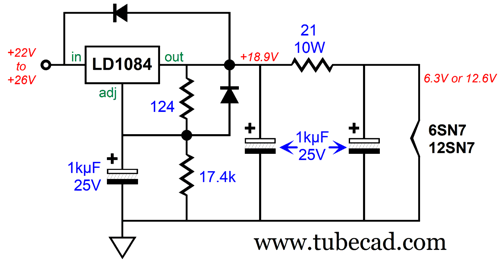
Wattage equals voltage²/resistance and current² x resistance. In other words, to get the 12SN7's heater to dissipate the same wattage as a 6SN7's heater requires four times the resistance due to the doubled heater voltage. If the 12SN7's heater elements resistance were only twice that of the 6SN7, its dissipation would be 7.56W, not 3.78W. My solution, twenty-five years ago, was to place a 21-ohm, 10W resistor in series with each _SN7 tube's heater and use an 18.9Vdc regulated power supply.
This works beautifully with the 6SN7 and 12SN7 (and 12SX7), but only ok with the 8SN7. An additional nicety is that the power resistor buffers the current inrush through the heater element, thereby greatly extending the tube's lifespan. (In addition, the voltage regulator slowly ramps up to full output voltage.) The problem with using the 8SN7 is that it sees 0.476A of current, not the specified 0.45A; and a voltage of 8.9Vdc, not the expected 8.4Vdc, 6% too hot.
By the way, most old tube-based power amplifiers run their tubes too hot. How so? The old amplifiers were designed with an intended wall voltage of 110Vac to 117Vac, with most expecting 115Vac. Over time, wall voltage has climbed. I measure 122Vac at my wall socket, which is 6% higher than 115Vac. (The workaround here is to solder small-valued resistors in series with the heaters, bringing the heater voltages down to their intended value.) In short, I wouldn't freak out when using an 8SN7 in this circuit, especially as it saved you $140 per tube, so you can afford to lessen its lifespan a wee bit. By the way, it wasn't just the 6SN7 that came in multiple heater voltages; for example, the 12AX7 was also made in a 6.3V version; the 6BQ5 also appeared as the 8BQ5; and the 6CG7, the noval version of the 6SN7, found its brother in the 8CG7. In fact, long ago I spotted several dozen NOS 8CG7 RCA clear-top tubes for $5 each at an electronic surplus store near Sacramento. I contacted all my nearby audiophile friends, alerting them of this find. No interest. Indeed, I heard the same complaint, "Why would I want this weirdo tube?" Other than glorious sound, no reason. When I returned to the store a month later, all were gone. Returning to my 25-yearold solution, the true issue here is inefficiency. When a 6SN7 is plugged in, the rest of the heater power supply must dissipate 11.82W, over three times more than the 6SN7's heater. If you build a single-tube line-stage amplifier with a 6SN7, that squandering of excess heat shouldn't kill that many polar bears; but if you are running four 6SN7s, tears will flow from green eyes. In addition, a 100VA heater power supply transformer will be needed. Thus, it's time for a new solution.
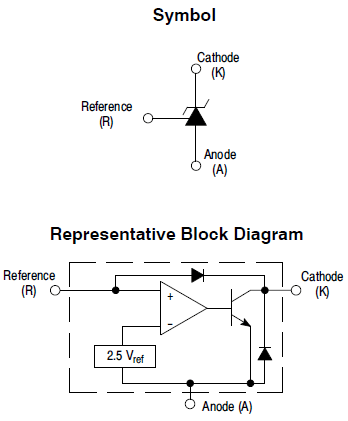
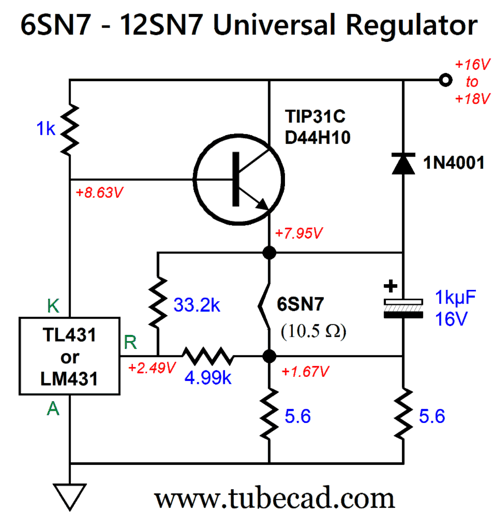
It has to be simple, which is difficult. In contrast, the complex is easy. It must also be more efficient. I knew that a voltage reference would be needed and that raw power-supply voltage of between 16Vdc to 18Vdc would be required. I remembered that my old friend, the TL431 , a 3-pin IC shunt-regulator voltage-reference, holds an internal 2.5V voltage reference and that I had used it in many constant-power circuits.
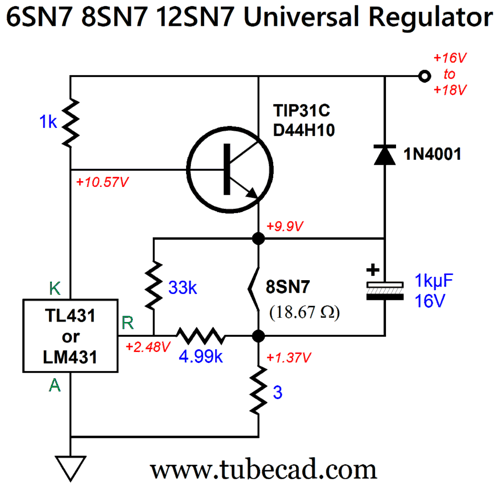
Its cathode can draw up to 100mA, which is amazing, but nowhere enough to handle even one 12SN7's 300mA current draw; thus, the need for an NPN power transistor to supply up to 600mA for a 6SN7.
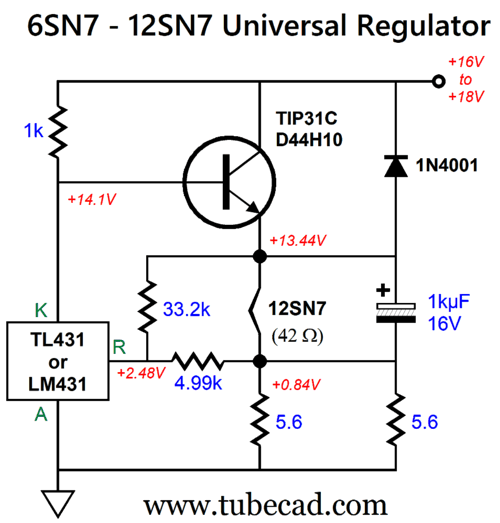
It took some fiddling with part values to get the desired results—but I knew it was possible, so I kept plugging away. The two 5.6-ohm resistors are needed, as 2.8-ohm 2W resistors are hard to find. The 1N4001 rectifier is there only to provide a discharge path for the 1kµF capacitor at shut-off. With a 12SN7 in place of the 6SN7, we see the following results.
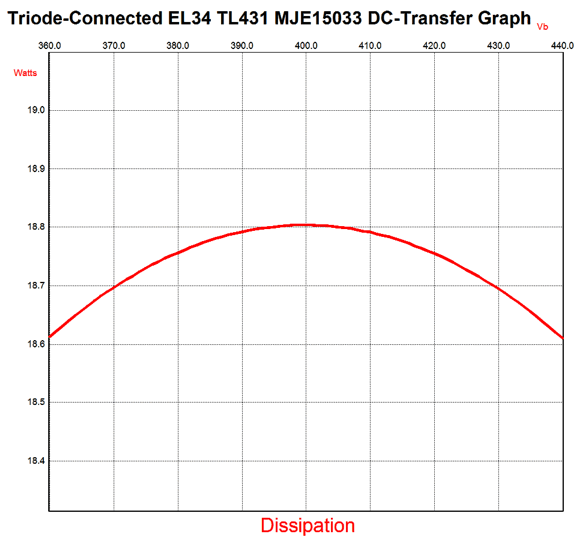
The heater sees a 12.56Vdc voltage drop, which is dang close to the target 12.6V. This took some doing, as constant-power circuits are not as flat as constant-current source or constant-voltage (aka voltage regulator) circuits. There's always a rounded hump in power graphs. Knowing this, I had to center the hump's peak so that both the 6SN7 and 12SN7 would hit their target heater voltages, as those two tubes were the most likely choices. My Post 348 shows this hump and explains several constant-power design issues.
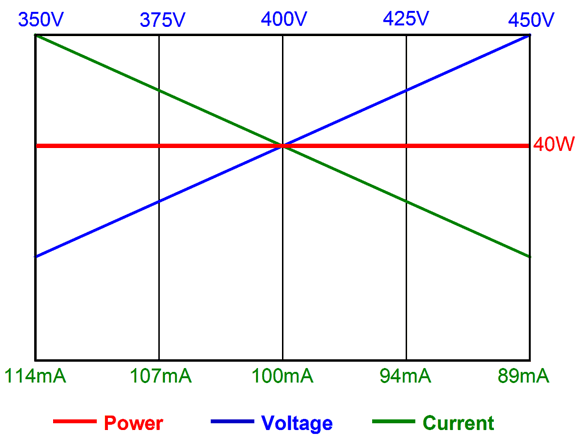
Ideally, something closer to the following RED graph plotline would result.
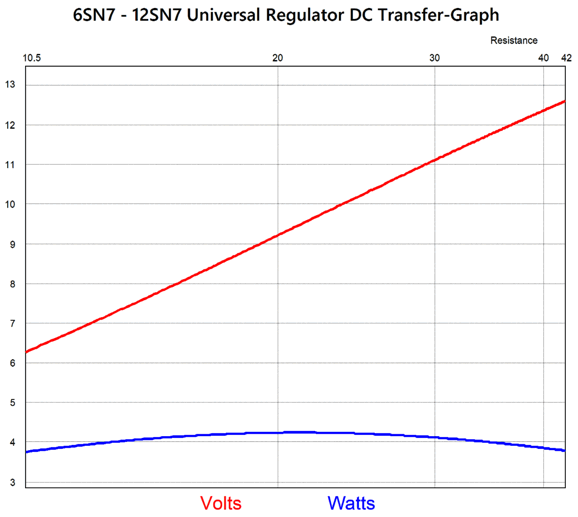
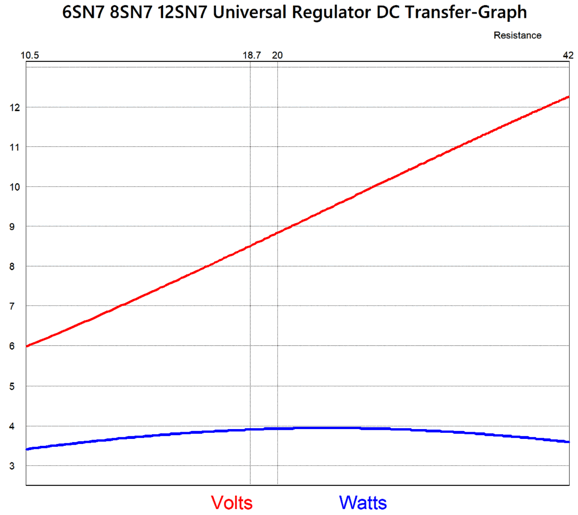
Here is what SPICE simulations revealed:
The logarithmic scaling of the X-axis makes finding 18.7 ohm hard to spot, but it is certainly over 4W of dissipation. (By the way, with a linear scaling of resistance, the voltage plotline curves.) One workaround to get the 8SN7 included in the mix of potential tubes is to back off the dissipation at 18.7 ohms, which results in slightly cooler operation of the 6SN7 and 12SN7, which I actually deem a good thing.
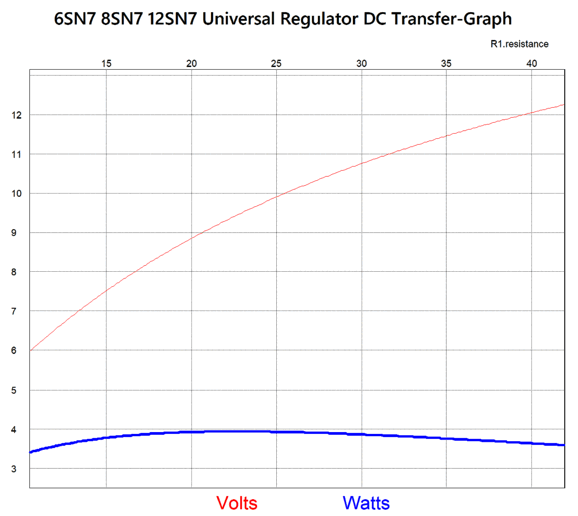
Note the single 3-ohm resistor and altered resistor values feeding the TL431. By the way, the NPN power transistor should get a heatsink, as with the 6SN7 it will dissipate over three times the heat then the 6SN7's heater Here are the SPICE-generated results:
The 6SN7 gets only 6Vdc, which once again, I consider a feature, as it extends tube lifespan. Here is the results but with linear resistance scaling.
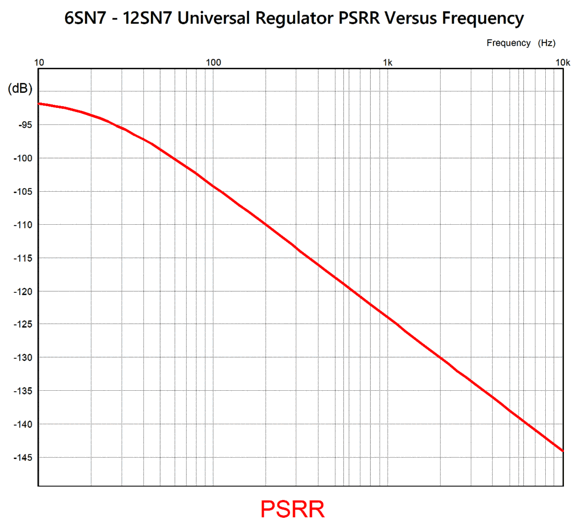
Since this circuit is so simple, I wondered if it would deliver a decent PSRR. Why bother wondering, as it is heater power supply after all? The heater is separated by an ultra-thin insulation layer; in addition, because it's close spacing, the capacitance between heater and cathode is relatively high. Well, I needn't have worried.
Over -100dB of rejection at 100Hz is splendid. Okay, the question to ask—always to ask—is this trip necessary? Why can't we just use a three-position rotary or toggle switch, allowing the three choices, 6SN7, 8SN7, and 12SN7?
What could possibly go wrong? Imagine you die. Not a pleasant thought, I'll admit. But it is nonetheless a certainty. One of your children inherits the piece of audio equipment. Knobs want to be rotated, much in the same way that swimming pools long to be filled with young children or triggers invite being pulled—it's called affordance. A twist of a knob and there goes $600 worth of rare 6SN7s.
Headphones and Subwoofers
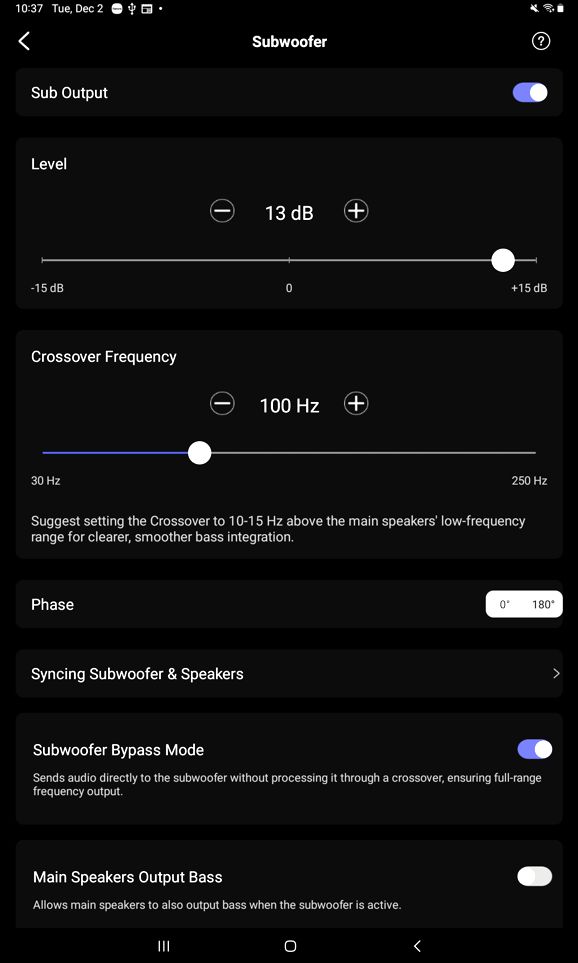
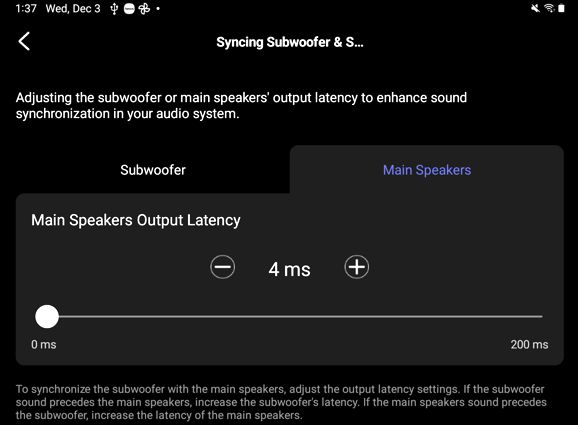
My response: Good question. Answer: cautiously. The problem is that headphone drivers are an inch from your ears, while the subwoofer must be further away. Sound travels about 13.5 inches per millisecond. Thus, the subwoofer's deep bass will lag behind the headphone's output, which is a problem with open-back headphones, such as those from Sennheiser and Stax, as the delayed deep bass will mix and muddy the bass from the headphones. My headphone's subwoofer sits at my right, with its 12in woofer firing down on the floor, and its output must travel about four feet to reach my ears, so with the Wiim Ultra I imposed a 4-millisecond delay to the headphones output. In addition, I set a crossover between the headphones and the sub at 100Hz.
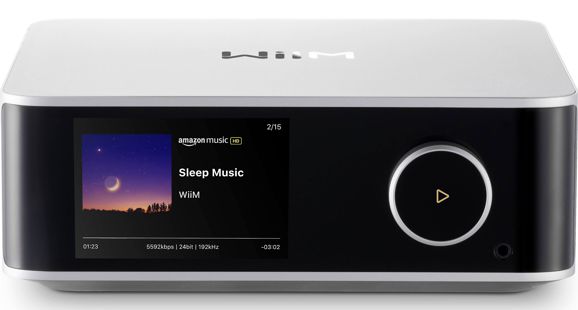
The Wiim Ultra is freaking amazing (had it arrived on the audio scene 30 years ago, it would have cost $20,000 and been worshiped, much in the same way the Cello Palette was and for many of the same reasons). But as it is so inexpensive, it fails to show up on true-audiophile's radar screens. Remember my best line, which should one day make it into Bartlett's (or, at least, a coffee mug or T-shirt):
Okay, back to the Wiim Ultra, in the Wiim app we get many subwoofer settings, such as the option of letting the Wiim Ultra impose the steep low-pass filter or send the subwoofer's internal amplifier fullrange signal, which is what I do, as the has its own built-in filter that cannot be bypassed—sadly. Why Sadly? The digital filtering is better than cheap capacitors and ICs. I took advantage of Black Friday and bought my second Wiim Ultra music streamer. The Wiim Ultra offers a subwoofer output signal (mono), which it can time align the main loudspeakers.
Note the option Syncing Subwoofer & Speakers. which leads to yet another menu page. Actually, two pages, with the first offer to automatically time align the subwoofer, the second allowing you to do it yourself.
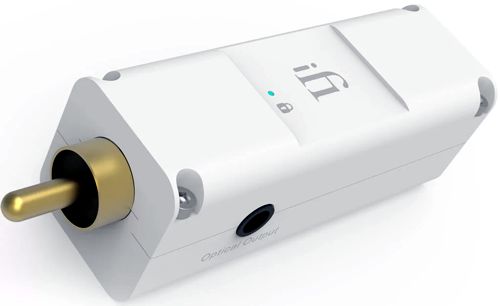
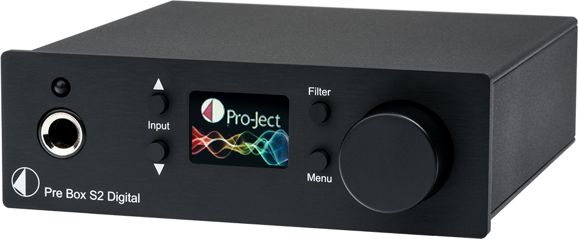
The new Wiim Ultra feeds my Pro-Ject Pre Box S2 DAC a digital signal via fiber optic through an iPurifier2 and another fiber optic link.
(I try to break all the ground connections that I can.) The Wiim Ultra gives the subwoofer's amplifier a time-advance mono input signal, as the subwoofer is on the floor.
Both the Pre Box S2 DAC and Wiim Ultra hold ESS DAC chips, but Pro-Ject DAC has an older version than what the Wiim Ultra holds. Nonetheless, with Digital Domestication, the older DAC wins hands down. All the background instruments sound not only clearer but more musically intertwined. The other sonic tells are that music sounds slower (which I believe is due to our brains having much less work to do decoding what is ultimately fake audio input) and quieter, not in the sense of hiss or hum, but in being less hectic or strained sounding. Normally, we must crank up the volume to gain clarity, but with Digital Domestication it pours forth, naturally, effortlessly. Moreover, the ear equates distortion with volume, so distortion-free music sounds quieter. I love what I am hearing. Since the Wiim Ultra can accept so many different inputs, including phono cartridges, I opted for a WiFi connection to my PC or my other Wiim Ultra, which sports a 4T SSD plugged into its rear USB port. By the way, when streaming, to not think that it is anything like live radio or TV broadcasts or LP and tape playback. The Wiim Ultra holds a CPU and it runs on the Linux operating system. When select a track to play, the streamed data arrives in seconds and is stored in RAM in the Wiim Ultra, which it then decodes and plays back. I can control my new headphone system with either my phone, my tablet, or my PC. The Pre Box S2 DAC sports a more than decent solid-state headphone amplifier inside, which I use to drive low-impedance headphones, as my tube-based headphone amplifier is designed to drive 300-ohm loads.
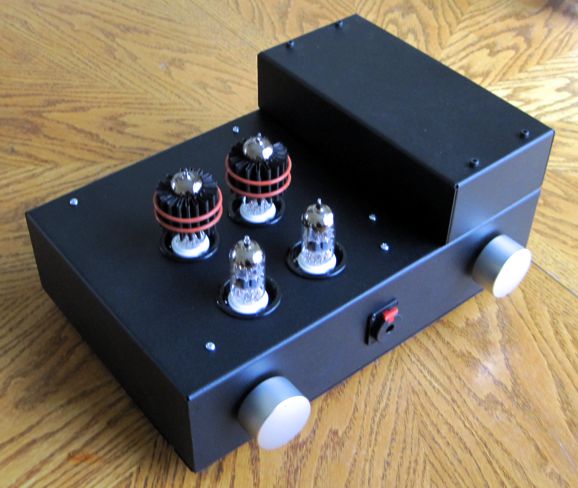
My Sennheiser HD 660S2 now sound better than my Stax ES headphones, not in absolute detail, but in naturalness. I changed out my usual tube headphone amp for my special design that forsakes a push-pull, cathode-follower output stage for a push-pull grounded-cathode output stage. In other words, no degenerative feedback other than the two triodes' inherent plate resistance in parallel. Yes, the Zo goes up, way up (about 1200 ohms), but the naturalness and effortless-sound goes through the roof. Here's the amazing thing, I am not using fancy parts (as in $$$ capacitors) in the headphone amp, just radically different topology. With fancy parts, I might look into buying EX-L Depends for men. The tweaked the time delay between headphones and subwoofer resulted in deep bass cohering in the music, no longer sounding dissociated, like the leaky bass from a party next door in a cheap apartment. You can see the headphone amp and its circuit here, Post 503, way, way at the bottom. (Dear God, I write long posts.)
Music Recommendation: Any Album by Baba Blues
(The raging balance)
//JRB
AI Summary
Did you enjoy my post? Do you want to see me make it to post 1,000? If so, think about supporting me at Patreon.
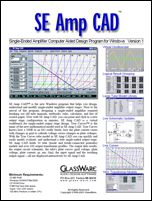
User Guides for GlassWare Software
For those of you who still have old computers running Windows XP (32-bit) or any other Windows 32-bit OS, I have setup the download availability of my old old standards: Tube CAD, SE Amp CAD, and Audio Gadgets. The downloads are at the GlassWare-Yahoo store and the price is only $9.95 for each program. So many have asked that I had to do it. WARNING: THESE THREE PROGRAMS WILL NOT RUN UNDER VISTA 64-Bit or WINDOWS 7, 8, and 10 if the OS is not 32-bit or if it is a 64-bit OS. I do plan on remaking all of these programs into 64-bit versions, but it will be a huge ordeal, as programming requires vast chunks of noise-free time, something very rare with children running about. Ideally, I would love to come out with versions that run on iPads and Android-OS tablets.
|
I know that some readers wish to avoid Patreon, so here is a PayPal button instead. Thanks. John Broskie
John Gives
Special Thanks to the Special 90 To all my patrons, all 91 of them, thank you all again. I want to especially thank
I am truly stunned and appreciative of their support. In addition I want to thank the following patrons:
All of your support makes a big difference. I would love to arrive at the point where creating my posts was my top priority of the day, not something that I have to steal time from other obligations to do. The more support I get, the higher up these posts move up in deserving attention.
If you have been reading my posts, you know that my lifetime goal is reaching post number one thousand. I have 375 more to go. My second goal was to gather 1,000 patrons. Well, that no longer seems possible to me, so I will shoot for a mighty 100 instead. Thus, I have just 9 patrons to go. Help me get there. Thanks.
New URL of the GlassWare website |
||||










| www.tubecad.com Copyright © 1999-2025 GlassWare All Rights Reserved |